The AI Visibility Tool Flood: Businesses Want Solutions, Not More Dashboards

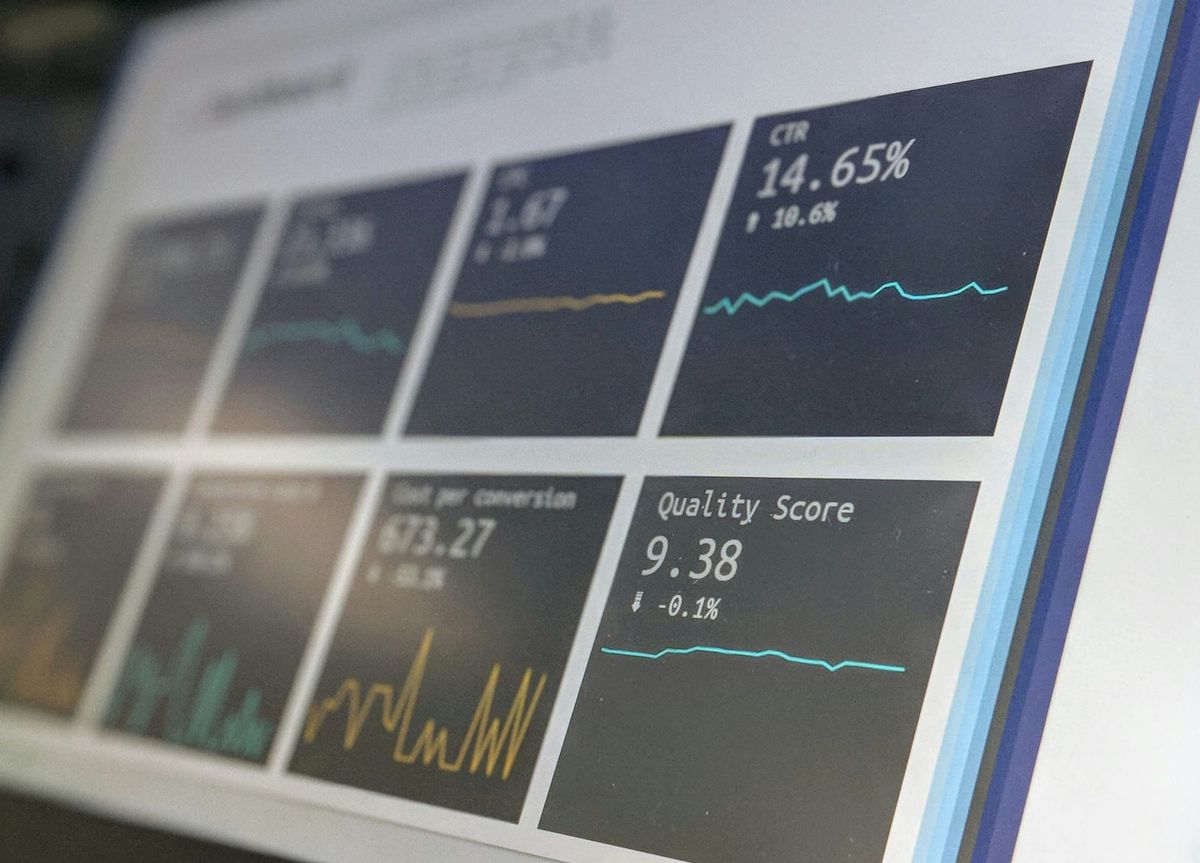
AI visibility tools are launching everywhere.
Some track brand mentions in ChatGPT. Others monitor citations across Perplexity, Gemini and Google AI Overviews. Many compare competitors, analyse sentiment and calculate an AI share-of-voice score.
The dashboards look different, but the message is often similar:
- Your brand is missing from important AI answers.
- Your competitor is being mentioned more frequently.
- Your website is not earning enough citations.
- Your AI visibility score needs improvement.
This information is valuable. Businesses need to understand how AI platforms discover, describe and recommend them.
But the market is quickly becoming crowded with tools that are very good at pointing out problems.
The business is then left with the difficult part:
What should we do now?
That is the real opportunity in the AI visibility market.
Businesses do not need another platform that only identifies an issue. They need solutions that help diagnose the cause, prepare the fix, execute the work safely and measure the result.
The future of AI visibility will not be defined by who creates the most detailed dashboard.
It will be defined by who can turn visibility data into business outcomes.
Why AI Visibility Tools Are Flooding the Market
The growth of AI visibility tools is a direct response to changing search behaviour.
People are no longer relying only on traditional search results to discover products and services. They increasingly use AI assistants to research options, compare providers and build shortlists.
A potential customer may ask:
- What is the best software for my business?
- Which provider is suitable for my industry?
- What are the alternatives to this product?
- Which company offers this particular feature?
- How do these two platforms compare?
- Which solution would you recommend?
The answer may mention only a few companies.
For brands, appearing in those answers can influence awareness, credibility and the customer’s shortlist.
Recent B2B buyer research from G2 found that more than 80% of surveyed buyers had used AI chatbots for software recommendations during the previous two years. Half of those buyers said AI had its greatest influence during shortlisting and evaluation. (Sell G2)
That explains why AI visibility has become a serious marketing priority.
It has also created a fast-growing software category.
An industry index updated in May 2026 describes a market ranging from free single-query checkers to enterprise platforms offering prompt monitoring, citation tracking, competitor benchmarking, sentiment analysis and historical reporting. It notes that most platforms currently concentrate on tracking whether and where brands appear in AI-generated answers. (SixSignal)
Established SEO platforms are entering the market alongside specialist startups. Ahrefs, for example, now measures AI mentions, citations, impressions and AI share of voice through Brand Radar. (Ahrefs Help Center)
The market is no longer short of tools that can measure AI visibility.
What AI Visibility Tools Do Well
The new generation of AI visibility platforms solves a genuine problem.
Traditional SEO tools measure rankings, impressions, clicks, backlinks and website health. AI visibility tools examine how brands appear inside generated answers.
They can help businesses understand:
- Whether an AI engine mentions their brand
- Which questions produce those mentions
- Which pages receive citations
- Which competitors appear more frequently
- Which external sources influence answers
- How the brand is described
- Whether visibility is improving over time
These insights can reveal issues that traditional SEO reports may not show.
A company may rank well on Google but still be absent when someone asks ChatGPT for the best products in its category.
An AI assistant may recognise a company by name but fail to recommend it during an unbranded discovery query.
A product may be mentioned using outdated information pulled from an old article or third-party website.
AI visibility tools make these problems observable.
That is important.
The problem begins when measurement is treated as the complete solution.
Businesses Are Not Short of Problems to Fix
Modern businesses already have more dashboards than they can actively manage.
SEO tools find technical errors.
Analytics platforms report declining traffic.
Content tools identify missing topics.
Brand-monitoring systems detect negative sentiment.
Conversion tools highlight underperforming pages.
AI visibility tools now add another layer of recommendations.
Every new platform creates another report.
Every report creates another list of tasks.
The business must still:
- Understand which findings matter.
- Investigate the root cause.
- Decide what should change.
- Prepare the content or technical fix.
- Send it to the appropriate team.
- Get the change reviewed and approved.
- Implement it safely.
- Measure whether it worked.
The issue is not a lack of information.
It is a lack of execution capacity.
A report may be completely accurate and still create no value if the recommendation remains in a backlog for three months.
A Visibility Score Is Not a Business Outcome
Imagine that an AI visibility tool tells a company:
Your brand appears in only 12% of relevant AI-generated answers.
The number sounds important, but it immediately creates more questions.
- Were the right customer questions tested?
- Which high-value prompts are being missed?
- Why are competitors appearing instead?
- Is the issue caused by content, authority or technical accessibility?
- Which page should be improved?
- What exactly needs to change?
- Who will make the change?
- How will the company know whether it worked?
The visibility score identifies a symptom.
It does not necessarily explain the cause or provide the solution.
AI visibility is also not a fixed measurement. Generated answers can vary across platforms, prompt wording, locations, model versions and repeated runs.
Research published in 2026 found that one-time checks can be unreliable because AI answers vary across prompts, time and repeated observations. The researchers recommend measuring visibility as a distribution rather than relying on one result. (arXiv)
A broader review of GEO research similarly describes AI visibility as a multistage process involving crawling, retrieval, reranking, citation, prominence, factual use and user behaviour. (arXiv)
This means businesses need more than a score.
They need a repeatable process that connects evidence, action and verification.
What Businesses Actually Want From AI Software
The expectations placed on business software are changing.
Businesses previously bought software primarily to store information, improve workflows or provide analytics.
AI has raised the expectation.
Companies increasingly want software that can participate in completing the work.
They are asking:
- What task will this remove from my team?
- What process will become faster?
- What outcome will improve?
- Can the platform act safely?
- Can humans review its decisions?
- Can an action be reversed?
- Can the result be measured?
This shift is also visible in purchasing behaviour.
G2’s 2026 buyer research found that three out of four buyers who had experienced a CFO veto expected a positive return within six months of purchasing software. The report concludes that buyers increasingly need a clear connection between spending and measurable outcomes. (Sell G2)
Businesses are not rejecting analytics.
They are demanding that analytics lead somewhere.
A dashboard should not be the destination. It should be the starting point for action.
The Next Phase of AI Visibility Is Execution
The first phase of the AI visibility market was measurement.
Businesses needed to know whether they appeared in AI-generated answers.
The second phase is interpretation.
Platforms began explaining which prompts, citations and competitors influenced the result.
The next phase is execution.
Businesses will expect AI visibility platforms to help:
- Diagnose why a visibility gap exists
- Identify the highest-priority issue
- Recommend a specific change
- Prepare the content or technical fix
- Route the change for approval
- Execute approved work
- Verify the outcome
- Learn from the result
This is the difference between an AI visibility dashboard and an operational AI visibility solution.
The dashboard says:
Here is the problem.
The operational platform says:
Here is the problem, here is the likely cause, and here is the fix ready for your approval.
Why Fixing AI Visibility Is Not Simple
Improving AI visibility is not only about adding more keywords or publishing more articles.
A brand may be missing from AI answers for several reasons.
Technical Accessibility
Search and AI systems must be able to access, process and understand the website.
Crawlability, indexing, canonicalization, rendering and website structure still matter.
Content Clarity
The website may not clearly explain:
- What the company does
- Who the product is for
- What problem it solves
- How it differs from alternatives
- Which features it provides
- What evidence supports its claims
Authority and Trust
A company’s own claims may not be enough.
AI engines may rely on credible publications, customer reviews, original research, professional profiles and other independent sources.
Entity Consistency
Company names, product descriptions, features and leadership information should be consistent across the website and trusted external sources.
Freshness
AI systems may continue retrieving outdated information from old website pages, PDFs and external articles.
The right solution depends on the actual cause.
This is why businesses need diagnosis and controlled execution, not another generic recommendation to “create better content.”
Where Kloovy Fits Into This Market
Kloovy is designed for the execution phase of AI visibility.
It does not treat monitoring as the final product.
Kloovy audits how a brand appears across ChatGPT, Perplexity and Google AI Overviews. It then converts identified visibility gaps into action cards containing prepared fixes. The business reviews each change, approves or edits it, and the Kloovy agent executes the approved work. The platform then rechecks the engines and reports the observed result. (Kloovy)
The workflow is:
Audit → Prepare → Approve → Execute → Verify
The business remains in control throughout the process.
Nothing is executed without approval.
This matters because businesses want solutions, but they also need transparency, governance and control. G2’s buyer research found that 87% of surveyed decision-makers were more likely to buy from a vendor that offered transparent AI than from a cheaper black-box alternative. (Sell G2)
Kloovy’s role is not to replace the value of AI visibility analysis.
It is to complete the workflow that analysis begins.
From Reporting Problems to Resolving Them
|
Traditional visibility workflow |
Outcome-focused workflow |
|
Detect a missing citation |
Investigate why it is missing |
|
Generate a visibility score |
Prioritize the most valuable gap |
|
Recommend an improvement |
Prepare the actual fix |
|
Add the issue to a backlog |
Route the fix for approval |
|
Leave execution to the business |
Execute the approved change |
|
Continue monitoring the score |
Verify the result after execution |
This shift does not make monitoring tools irrelevant.
It changes what businesses will expect from them.
Monitoring becomes one part of a larger system rather than the final deliverable.
The AI Visibility Market Will Consolidate Around Outcomes
The current flood of AI visibility tools is normal for a new technology category.
Many products enter the market with similar features. Over time, measurement becomes standardized, customers become more informed and differentiation moves closer to business value.
Tracking mentions will become common.
Citation reports will become common.
Competitor comparisons will become common.
The more important questions will be:
- Which platform helps us improve?
- Which platform reduces manual work?
- Which platform can act safely?
- Which platform provides evidence?
- Which platform connects action to outcomes?
Businesses will not keep paying for multiple tools that identify the same problem in slightly different ways.
They will favour platforms that help close the loop.
Businesses Want the Problem Solved
AI visibility analysis is valuable.
It shows businesses whether they are part of the answers shaping customer decisions.
But awareness is not the final objective.
The objective is improvement.
The first generation of AI visibility tools helped businesses see the problem.
The next generation must help them solve it.
That means moving from:
Monitoring to action.
Recommendations to execution.
Dashboards to outcomes.
Kloovy is built around that shift.
Because businesses do not need another tool that only tells them what is wrong.
They need the problem fixed.
Frequently Asked Questions
What Are AI Visibility Tools?
AI visibility tools measure how brands, products and websites appear in AI-generated answers. They commonly track mentions, citations, prompts, sentiment and competitor visibility.
Why Are So Many AI Visibility Tools Launching?
AI-assisted search is influencing how customers discover and evaluate companies. This has created demand for tools that monitor whether brands appear in answers generated by ChatGPT, Perplexity, Gemini, Google AI Overviews and similar platforms.
Are AI Visibility Scores Reliable?
They are useful as directional measurements, but they should not be treated as fixed rankings. AI answers can vary across prompts, platforms, locations and repeated runs.
What Should Businesses Expect Beyond Monitoring?
Businesses should expect clear diagnosis, prioritized recommendations, prepared fixes, human approval, safe execution and post-change verification.
How Is Kloovy Different?
Kloovy uses AI visibility analysis as the beginning of an execution workflow. It prepares evidence-backed fixes, lets the business approve every change, executes approved actions and verifies the observed result.
Turn AI Visibility Insights Into Action
Knowing that your brand is missing from AI-generated answers is useful.
Understanding why it is missing is better.
Fixing the underlying issue is what creates business value.
Check your AI visibility with Kloovy and discover the first website fix worth testing.