
Budget for AI Discovery Without Abandoning SEO or Existing Demand
Protect essential acquisition work, fund a bounded learning question and define what would justify continuing, changing or stopping the investment.
Protect essential acquisition work, fund a bounded learning question and define what would justify continuing, changing or stopping the investment.

Connect recorded AI referrals to useful sales evidence with clear identifiers, qualification rules and honest limits on what attribution can establish.

Keep Google product surfaces separate in research, content briefs and reporting. A result in one experience does not establish performance in the others.

Bring native reports, manual observations, analytics and sales records into one evidence ledger while preserving their different units and limitations.

Trace a failed public-page request through policy, edge security and the application. Preserve crawler identity, evidence and a narrow recovery plan.

Avoid treating every OpenAI crawler as the same permission. Prepare a policy decision first, then give the technical owner a narrow, verifiable change.

Choose where to invest by the decisions your client’s buyers need to make, then separate evidence of demand from the cost of learning.

Evaluate a GEO platform on a real, authorised workflow: evidence, review, execution, recovery and verification. Use clear acceptance tests before expanding.

Approval only protects a client when the reviewer understands the change. Define who checks facts, technical scope, permissions and recovery before execution.

Rank AI visibility work by commercial relevance, evidence, risk and effort, then turn a long audit into a small set of testable changes.

Give clients a useful timetable without promising citations. Separate implementation, discovery, answer visibility and business outcomes.

Build a repeatable prompt panel, preserve the evidence and report what each AI engine actually showed without confusing mentions with endorsements.

Turn an unsupported service-page claim into a useful explanation by reviewing evidence, practitioner input, limitations and the customer's decision.

Decide whether a page needs structured data, a content correction or a different investigation before putting schema into the implementation queue.

Check the foundations in a sensible order before commissioning more content or markup: access, indexing, page identity and the buyer's actual question.

Use a compact change brief, named decision roles and explicit acceptance checks to stop useful SEO recommendations getting stuck between teams.

A limited, anonymous Kloovy case illustrates an agency question worth solving: how do findings become approved website changes without losing accountability?
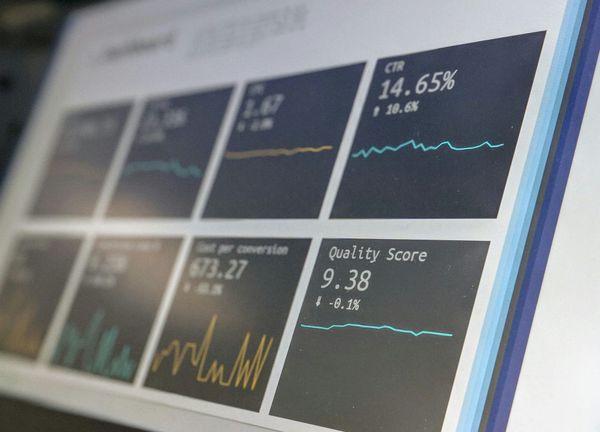
AI visibility tools are launching everywhere. Some track brand mentions in ChatGPT. Others monitor citations across Perplexity, Gemini and Google AI Overviews. Many compare competitors, analyse sentiment and calculate an AI share-of-voice score. The dashboards look different, but the message is often similar: * Your brand is missing from

kloovy
Search visibility is no longer limited to ranking on Google. Customers are increasingly discovering companies, comparing products and making decisions through ChatGPT, Perplexity, Google AI Overviews, Gemini and other AI-powered experiences. This creates a new challenge for businesses. It is no longer enough to know where your website ranks.

Guides
An agentic GEO platform that audits how AI engines cite your brand, then ships the fixes for you — with a human approving every change.

Guides
Plain definitions of core GEO terms — AEO, AI Visibility Score, citation share, answer blocks, llms.txt, AI crawlers, and more. Your cheat sheet for AI search visibility.

Guides
To get cited by AI engines, make your content easy to crawl and quote: static HTML, answer blocks, schema, and open crawler access. A step-by-step 2026 guide.

Guides
An AI Visibility Score measures how often your brand is cited in ChatGPT, Perplexity, and AI Overviews. Learn what it tracks, how it's calculated, and how to improve yours.

Guides
SEO ranks you in search results. AEO gets you cited as the answer by AI engines. GEO is the umbrella for visibility across all generative AI. Here's how the three differ and work together in 2026.